 English
 Swedish
 Danish
 Norwegian
 Finnish
























Dog Safety & Tips, Reflective Products, Reflector Safety, Tips & Guides
Dog Walking at Night: Expert Tips for Keeping Dogs Safe
Every evening, millions of dog owners do the same thing: clip on the lead, head out the door and walk the same streets they always do. It feels ordinary. It feels safe. But once the lights fade, that familiar route changes in ways that are easy to underestimate. In Sweden alone, up to three dogs are injured or killed in traffic every single day, and the numbers rise sharply through autumn and winter, when evening walks happen in complete darkness. This is our Interviu with Dana on how to keep you dog walking at night safe.
Dana Dubriwny knows this better than most. With more than 20 years in professional pet care, first as founder of Chicago Pet Sitters, one of the city’s leading dog walking companies, and now as owner of Seattle Bark District, she has spent a significant portion of her career thinking about what keeps dogs and their owners safe after dark. She has trained teams of professional walkers, handled every breed and temperament imaginable, and seen first-hand how quickly an ordinary evening walk can become an unexpected situation. We asked Dana to share what two decades on the lead has taught her about nighttime visibility, reflective gear, and the one rule she never breaks after dark.
|
Up to 3 |
Dogs are injured or killed in traffic every single day in Sweden alone – and the numbers rise sharply through autumn and winter. |
|
20+ |
Years of professional pet care and dog walking experience behind Dana Dubriwny’s nighttime safety advice. |
|
125m |
How far away a driver can spot a pedestrian or a dog wearing a reflective accessory – compared to just 20–30 metres (65–100 feet) in dark clothing. At 50 km/h, that reaction time is everything. |
Getting to Know Our Dog Walking Expert
Can you briefly introduce yourself and your pet sitting business?
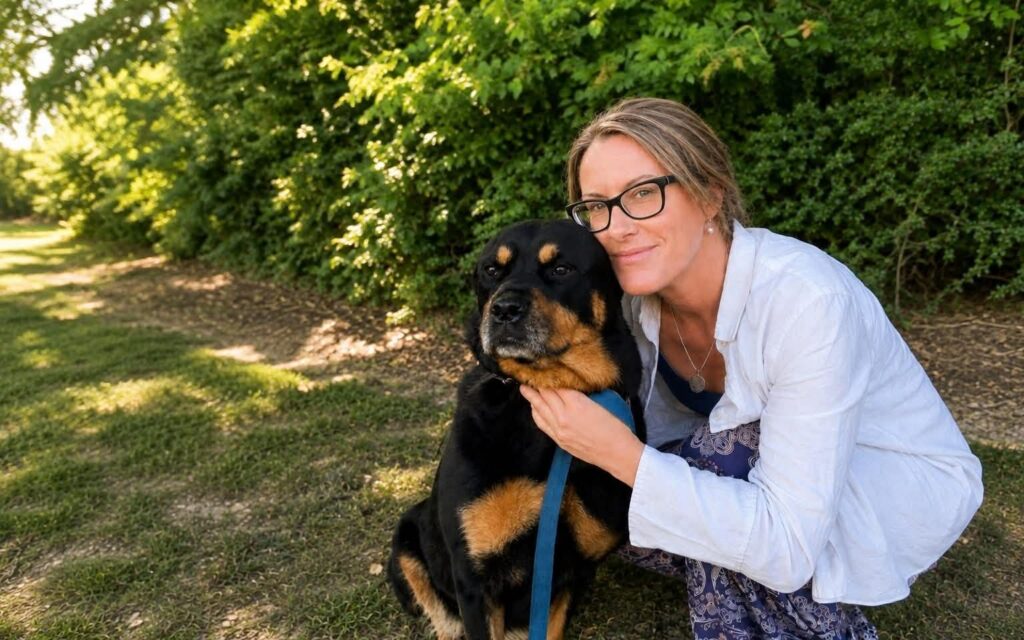
I’m Dana Dubriwny, and I own Seattle Bark District, a professional dog walking and pet care company in Seattle, Washington. I’ve been in the professional pet care industry for more than 20 years. Before Seattle Bark District, I founded Chicago Pet Sitters, which I owned for about 17 years before selling it in 2022. So I’ve spent a huge portion of my adult life not only caring for dogs, but also training and managing teams of professional dog walkers.
How long have you been working professionally with dogs?
More than 20 years, and really every type of dog you can imagine. Tiny dogs, giant breeds, puppies, seniors, reactive dogs, anxious dogs, high-energy dogs. When you’ve worked with that many different dogs, you learn that safety isn’t one-size-fits-all. You have to consider the individual dog, the environment, and what could happen unexpectedly.
“When you’ve worked with that many different dogs, you learn that safety isn’t one-size-fits-all. You have to consider the individual dog, the environment, and what could happen unexpectedly.”
Walking Dogs at Night: Risks & Reality
What are the biggest safety risks when walking a dog after dark?
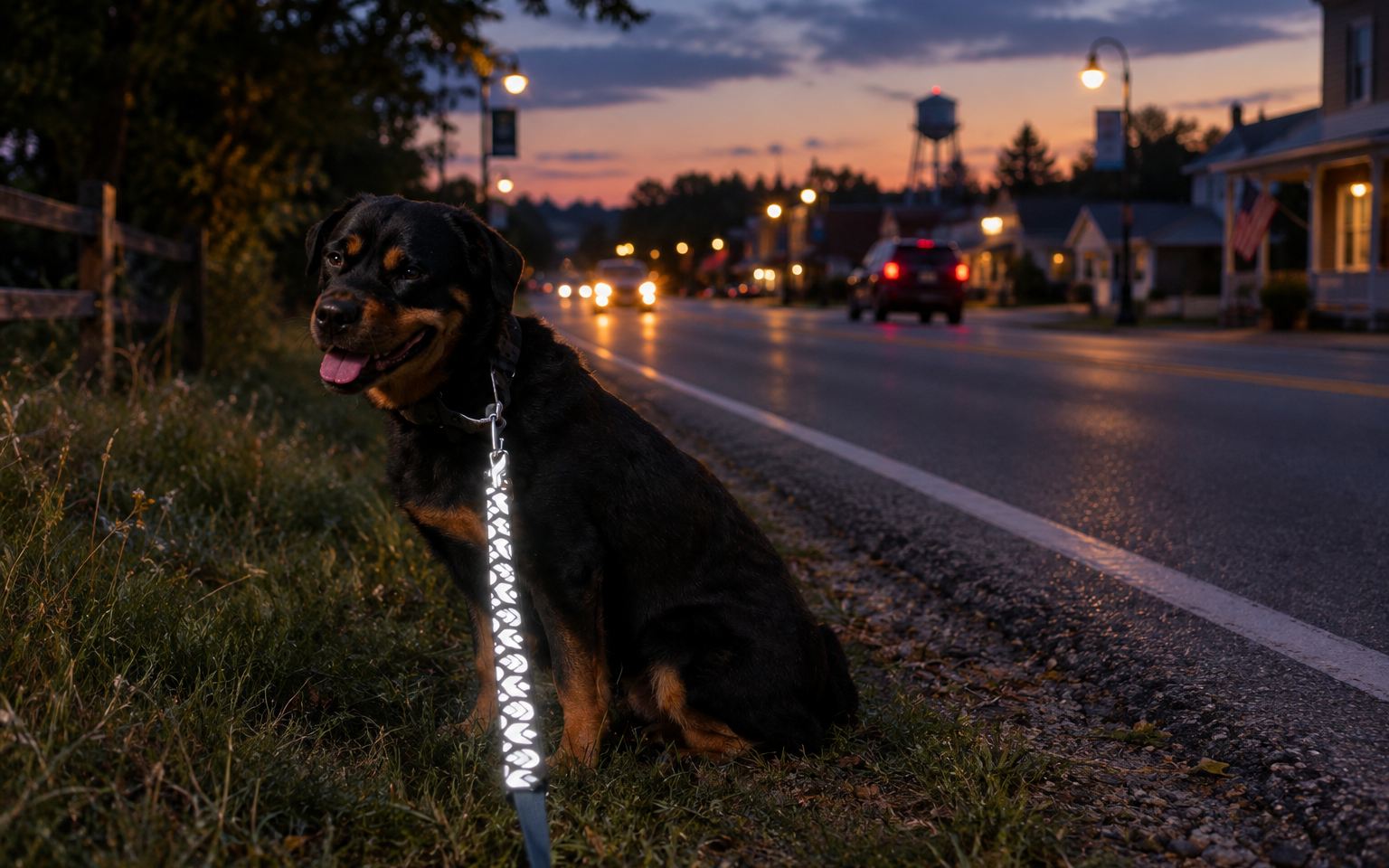
The biggest risk is simply not being seen. Drivers may not see the dog or even the person walking them until they’re very close, especially on darker residential streets. Dogs are also lower to the ground, and a small or dark-colored dog can be incredibly difficult to see.
There’s another risk people may not immediately think about. If your dog ever gets loose at night, visibility becomes even more important. A loose dog that’s difficult for drivers to see is in a much more dangerous situation. So I think about nighttime visibility not only in terms of keeping a dog safe during the walk, but also as an extra layer of protection if something unexpected happens.
Have you ever experienced or witnessed a dangerous situation while walking a dog at night?
In more than two decades in this industry, I’ve learned how quickly an ordinary walk can become an unexpected situation. You don’t have to be doing anything wrong. A dog can slip out of a harness, pull a leash from someone’s hand, or become frightened and bolt.
Those situations are concerning at any time of day, but darkness adds another risk: the dog may be much harder for drivers or cyclists to see. You can’t predict everything that might happen on a walk, but you can take steps to make sure both you and your dog are visible if it does.
Dog Walking Safety at Night: Safety & Visibility
Why is visibility such a critical factor when walking dogs at night?
Because you don’t just need to see. You need to be seen.
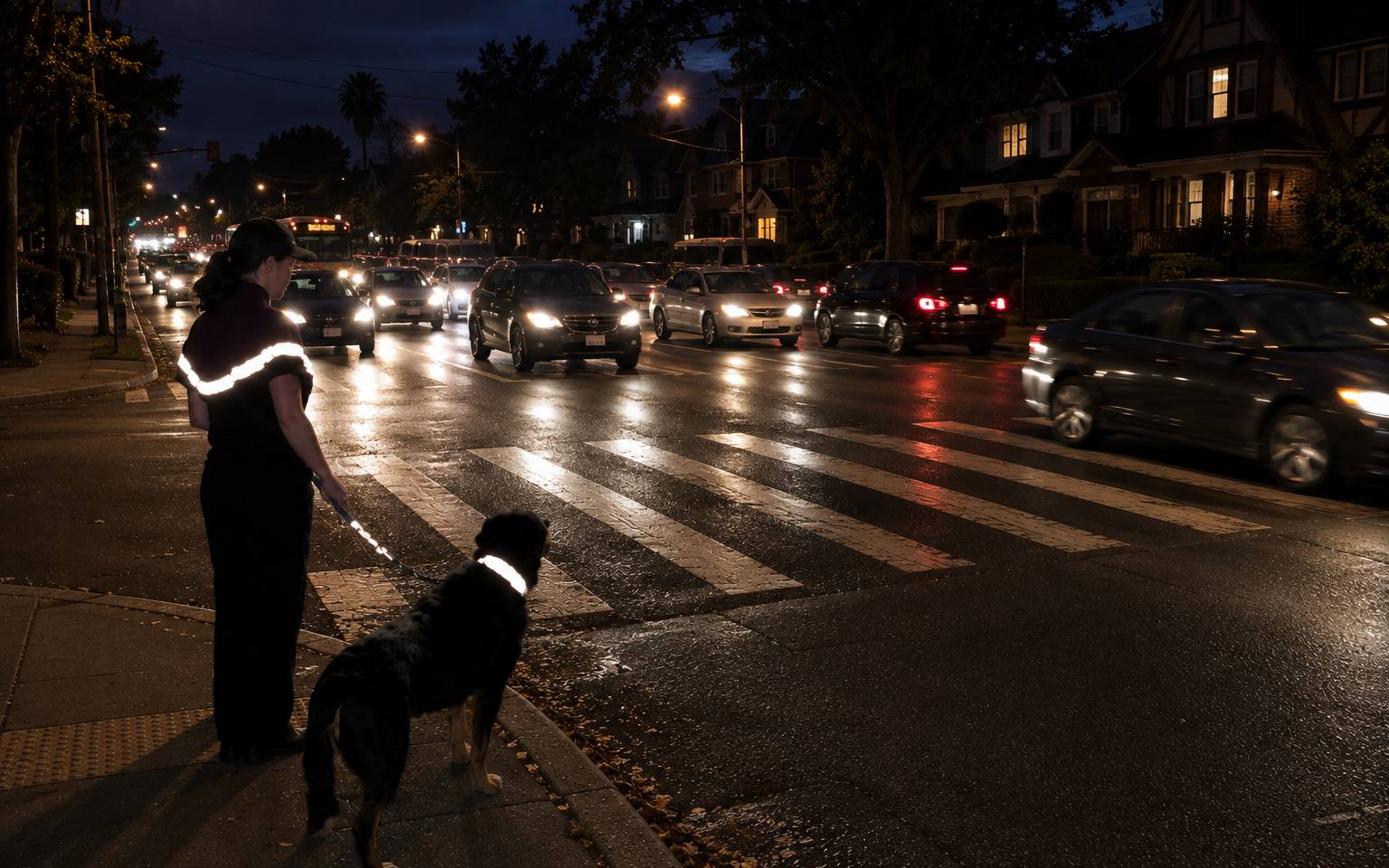
A driver might notice a person but completely miss the dog walking beside or in front of them. And depending on the dog’s size and coloring, they can almost disappear in the dark. The sooner a driver or cyclist recognizes that there’s both a person and a dog, the more time they have to react. Those few extra seconds can make a huge difference. Research backs this up: a reflective accessory makes a pedestrian, or a dog, visible from up to 125 meters away. Without one, a driver may not spot them until they’re just 20 to 30 meters away. At 50 km/h, that difference in reaction time isn’t small. It’s everything.
In your experience, how do drivers, cyclists, or other pedestrians react to dogs that are hard to see in low light?
The biggest concern is that drivers or cyclists may not realize a dog is there until they’re already very close. This is especially true around driveways, intersections, alleys, and residential streets, where a driver might see the person but completely miss the dog walking beside or ahead of them.
Never assume you’ve been seen. Keep your dog close when approaching driveways and intersections, pause before crossing, and make sure both you and your dog have reflective material that can be seen from multiple angles. The goal is to give drivers and cyclists as much time as possible to see you, slow down, and safely pass.
What role does reflective gear for dogs play in preventing accidents?
It’s an additional layer of protection. Reflective gear can make a dog’s shape and movement much easier to identify when headlights or another light source hits it.
And I think it’s especially important to remember that we’re preparing for the unexpected. If the leash gets dropped or a dog somehow gets loose, reflective or illuminated gear stays with the dog. Suddenly that visibility becomes even more important because the person is no longer right beside them.
Essential Reflective Dog Gear for Nighttime Visibility
What types of reflective gear do you recommend for dogs walking at night?
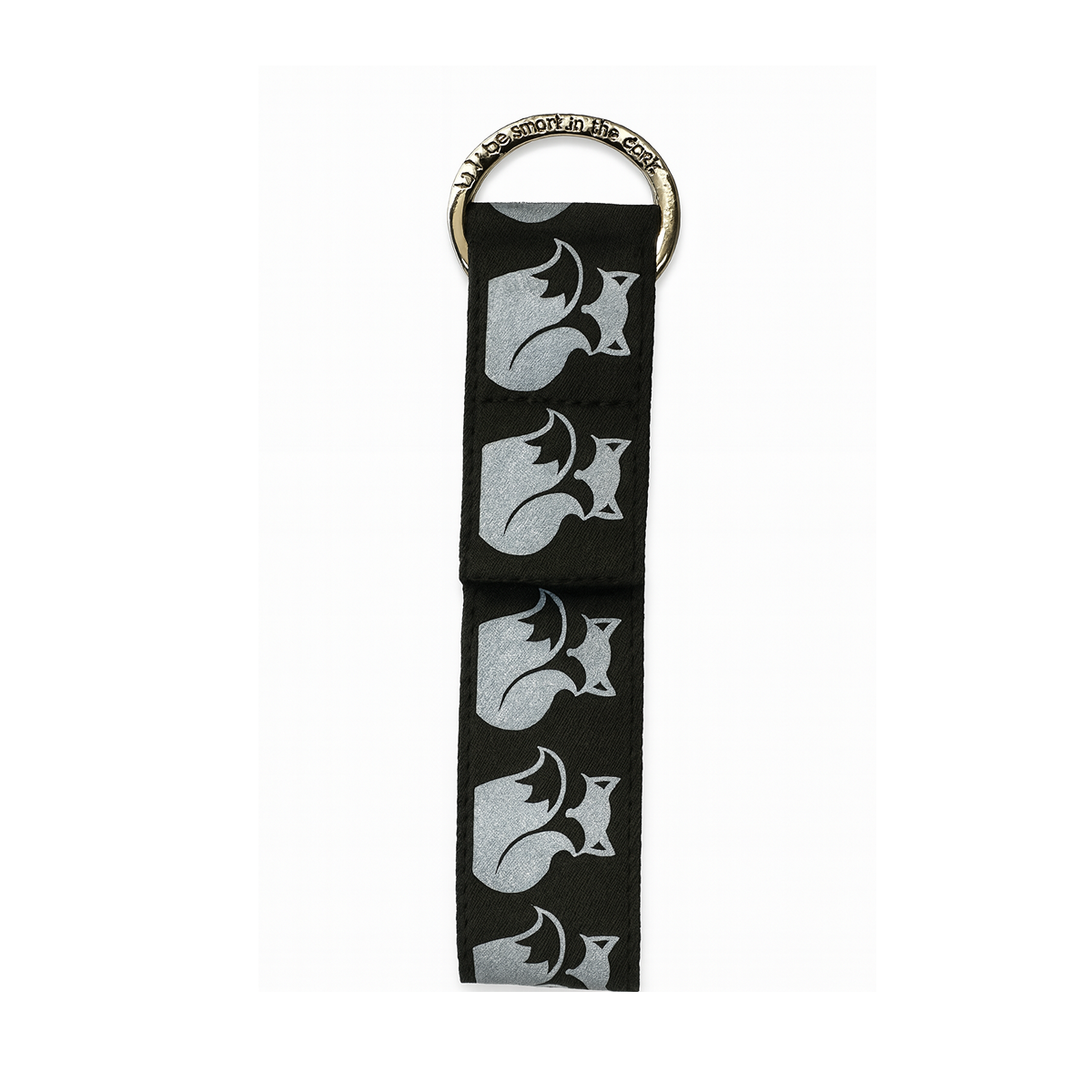
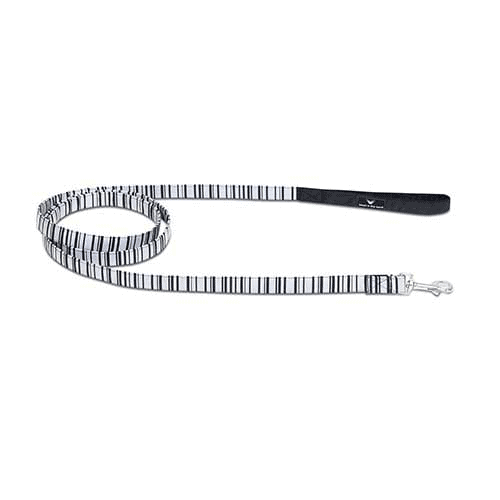
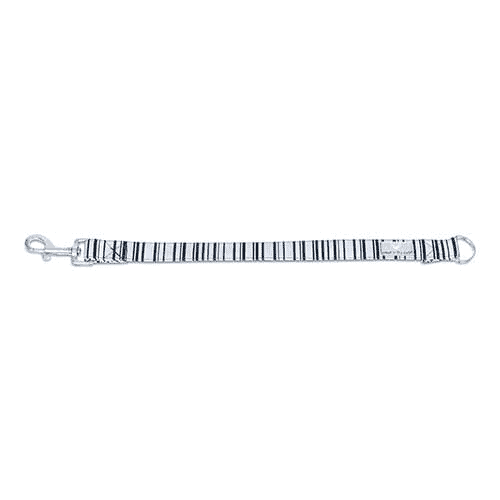
I like having visibility in more than one place. A reflective collar is an easy place to start, while a reflective harness or vest creates a larger visible area on the dog’s body. A reflective leash is also helpful because it makes the connection between you and your dog easier for drivers and cyclists to see.
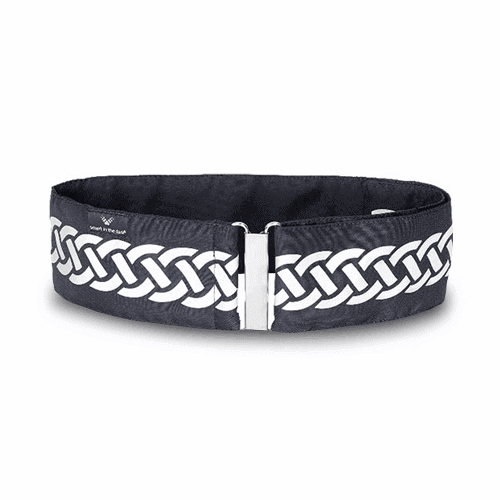
And don’t forget about yourself. A reflective hat, shawl, armband, or reflective strips on your clothing can make you much easier to spot, especially because the reflective material is higher up and more likely to catch a driver’s attention. Ideally, you want reflective elements on both you and your dog, at different heights and from multiple angles, so it’s immediately clear that there’s a person and a dog on the road.
Are there common mistakes dog owners make when relying on reflective gear for safety?
One thing people sometimes forget is that visibility applies to both ends of the leash. They think about making their dog visible, but not necessarily themselves. Ideally, you want reflective material on both the dog and the person walking them.
I also like visibility in more than one place on the dog, such as a reflective collar or harness paired with a reflective leash. The goal is to make it immediately clear to drivers and cyclists that there’s a person and a dog there.
Expert Dog Walking Tips for Staying Safe After Dark
Besides reflective gear, what other safety precautions do you recommend when walking a dog at night?
Situational awareness is really important. Stick to familiar routes when you can, keep your dog reasonably close, especially near intersections and driveways, and avoid distractions that keep you from seeing or hearing what’s happening around you. I also think it’s important to make sure your dog’s collar or harness fits securely and that you’re using a sturdy leash. And before you head out, take a moment to think about visibility from someone else’s perspective: if a car were approaching, how easily would they be able to see both you and your dog?
Do you suggest different safety strategies depending on whether you’re walking in urban areas, suburbs, or rural environments?
Definitely, although visibility matters in all three. In urban areas, you’re dealing with more cars, cyclists, intersections and people. In suburban neighborhoods, people sometimes feel safer because traffic is lighter, but you have cars pulling in and out of driveways and streets that may not be well lit.
In rural areas, you may have very little lighting at all, and vehicles can be traveling much faster. So the specific risks change, but the basic principle doesn’t: make yourself and your dog as easy to see as possible.
Advice for Dog Owners Walking at Night
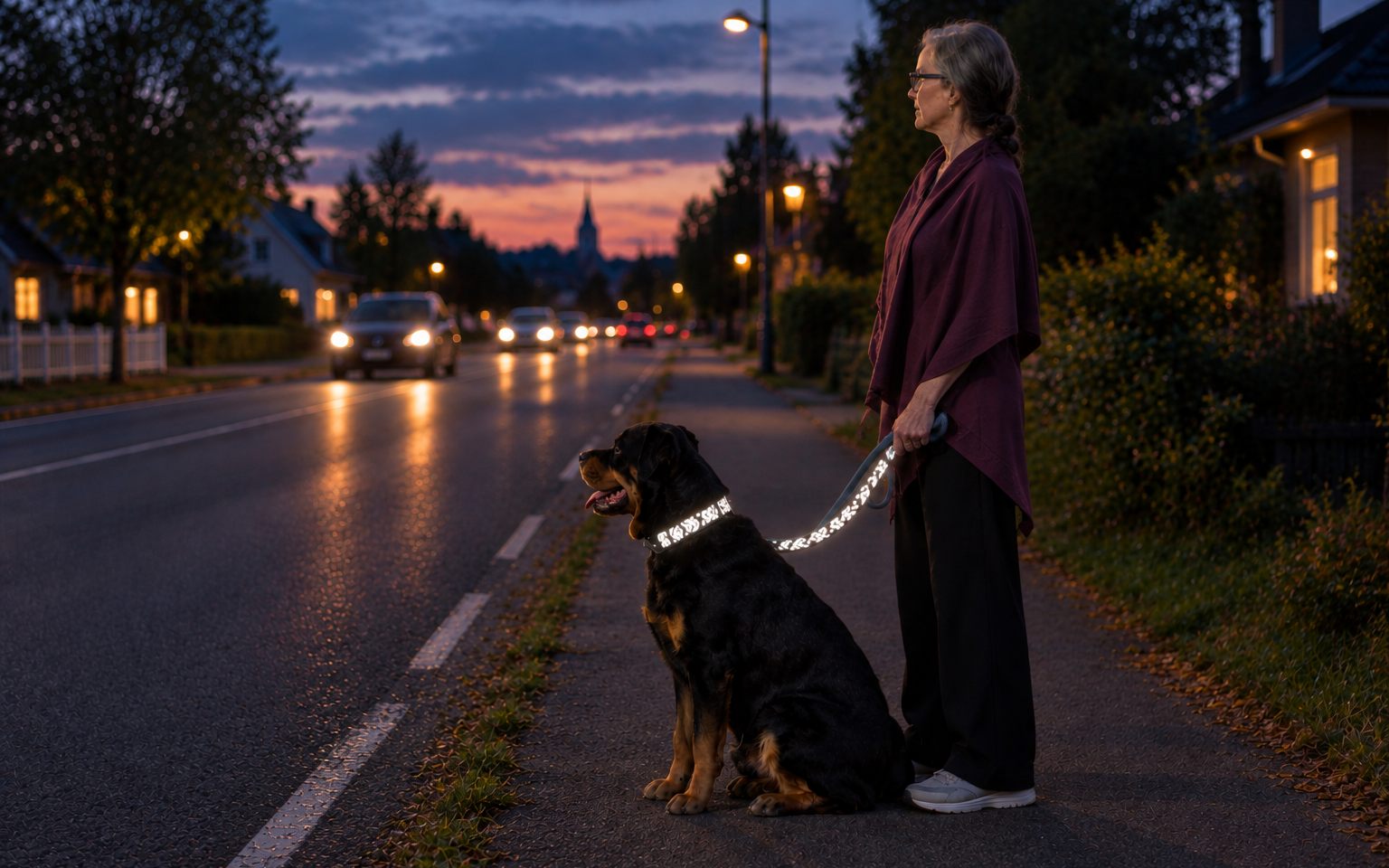
What advice would you give dog owners who are hesitant or nervous about walking their dog at night?
You don’t have to take the same walk you would during daylight. Choose a shorter route you know well, stay somewhere well lit, carry a flashlight, and make both yourself and your dog highly visible. You can control a lot of the risk simply by being thoughtful about where you walk and making sure other people can see you coming.
If you could give one must-follow rule for walking dogs at night safely, what would it be?
Assume other people cannot see your dog. Don’t assume a driver sees you. Don’t assume a cyclist sees your leash. Don’t assume someone backing out of a driveway realizes there’s a dog beside you. Make yourself and your dog impossible to miss.
“Assume other people cannot see your dog. Don’t assume a driver sees you. Don’t assume a cyclist sees your leash. Make yourself and your dog impossible to miss.”
Final Thoughts from Dana
Why do you think nighttime dog-walking safety is often underestimated by dog owners?
Because walking the dog is such an ordinary part of everyday life. You may have walked the same block hundreds of times, so it feels inherently safe. But darkness changes that familiar environment. It’s not necessarily that the street suddenly became more dangerous. It’s that you can see less and, just as importantly, other people can see less of you. That’s very easy to underestimate.
Is there anything else dog owners should know about keeping themselves and their dogs safe after dark?
After more than 20 years in professional pet care, one of the biggest things I’ve learned is that safety is often about preparing for something you don’t expect to happen. Most walks are completely uneventful. But a leash can slip out of your hand. A dog can get frightened. A gate can accidentally be left open. Something can happen in a split second.
You can’t control every situation, but you can control whether you and your dog are visible. Reflective gear, lights and good nighttime habits are such simple things, but if the unexpected ever does happen, being seen could make all the difference.
Keep your best friend safe on every evening walk. Explore our collection of Scandinavian-designed reflective gear for dogs and dog walkers.