 English
 Swedish
 Danish
 Norwegian
 Finnish











Kids Safety & Tips, Reflective Products, Reflector Safety, Tips & Guides
After School Activity Safety: How to Keep Children Visible at Evening Practice and Activities
When the school year starts, so does everything else. Football training on Tuesday evenings. Swimming on Thursdays. Music lessons on Friday afternoons. Dance class on Saturday mornings. The activities that fill our children’s lives outside the classroom are back and for millions of children, getting there and home again means travelling in the dark.
If you’ve already thought about visibility on the school run, you’ve won half the battle. If not, our guide to school traffic safety covers the morning and afternoon journey. The trip to after school activities, however, is a different challenge. It’s later in the evening, less familiar routes, and entails a tired child on the way home. So here is what you need to know about after school activity safety: the part of the day that often gets overlooked, precisely when the risk is highest.
|
6–9 pm |
The single riskiest window for child pedestrians in autumn and winter, according to NHTSA – when sports practice, music lessons and dance class often end. [1] |
|
55% |
Of children aged 6–17 in the US participate in a sports team or take lessons – millions of evening journeys every week. In Australia, 38% of children under 14 are in organised sport at least once a week. [2, 3] |
|
125m |
How far away a driver can spot a child wearing a reflective accessory – compared to just 20–30 metres (65–100 feet) in dark clothing. At 50 km/h (31 mph), those extra metres are the difference between a safe journey home and a near-miss. [4] |
Why Activity Journeys Are Different From the School Run
The school run has a set time, a fixed route, and ideally a habit built around it. The journey to after school activities is something else: it happens later, on routes that may vary by day of the week, often to venues that are less familiar and less well-lit than the walk to school.
And then there is the journey home. After an hour or two on the football pitch, or swimming, or dancing, a child is physically tired, sometimes cold, and possibly waiting for a late bus or a parent who is running behind. We’ve all been there, one time or another. The return journey after sport does not happen in the same mental state as the morning school run. It is darker, later, and the child is less alert – which is exactly when visibility matters most.
“The trip there, they’re excited. The trip back, they’re tired, it’s dark, and they’re thinking about anything except the traffic.”
Five things that make after school activity journeys a distinct safety challenge:
- Later timing. Most activities run from 5–9 pm. This is the riskiest window for child pedestrians, not the afternoon school run.
- Less familiar routes. Sports halls, music schools and dance studios may not be on the same well-practised route as school. New venues mean new crossings, new roads, new potential hazards.
- Heavy kit. A sports bag, a musical instrument, a dance kit bag, in addition to the school bag. More to carry means less attention on the road – and more reason to have a bag charm that swings and catches headlights automatically.
- Greater independence. Children travelling to after school activities are often older and more likely to make the journey alone. Independence is good, but it means no adult eye on the road.
- The fatigue factor. A child walking home after sport is not the same as a child walking to school in the morning. Tired muscles, tired mind, and still a road to cross.
The Hours When Activities End Are the Riskiest Hours on the Road
Here is the number that changes how you think about the after school journey. According to NHTSA data, the single riskiest three-hour window for pedestrians in autumn and winter is 6:00 to 8:59 pm. [1] Sports practice ends. Music lessons finish. Dance class lets out. And the children walk home.
This is not the school run. This is later, darker, and statistically more dangerous – precisely because it falls in the window where driver visibility is worst and traffic volumes are still significant after the evening commute. The American Academy of Pediatrics names 6 pm to 9 pm as the riskiest hours of the day for child pedestrians, reinforcing what NHTSA’s data shows. [1]
The clock change in October, from summer time to winter time, makes this worse overnight. The training session that ended in twilight in the beginning of the season, ends in complete darkness after the last Sunday of October.
Biking Home After School and E-Scooters: When Riding Is Riskier Than Walking
Many children don’t walk or use public transportation to get to their after school activities, they cycle, ride an e-bike, or zip along on an e-scooter. A cyclist or e-scooter rider moves faster than a pedestrian. That means a driver has less time to react. And children on bikes and scooters are often less visible than children on foot – dark technical clothing, no lights, no reflectors, moving through exactly the hours and conditions where visibility matters most.
The e-scooter injury surge
The data on child e-scooter injuries is striking. In the UK, the number of children injured by e-scooters increased more than fifteen times between 2019 and 2024 – from fewer than 10 cases to nearly 150 per year, at just three trauma centres. [12] In the US, the number of children under 15 injured by e-scooters more than doubled in a single year, reaching 17,641 in 2024. Children aged 11 to 14 represent the largest group of injured riders – exactly the age at which children begin travelling independently to sports and activities. [13]
Lurie Children’s Hospital, one of the US’s leading paediatric hospitals, advises that ‘high-visibility or reflective gear and lights should be worn at night’ by e-scooter riders. [14] For a child riding an e-scooter home from football training at 8 pm in October, that is not optional advice, it is the single most effective thing they can do to be seen before something goes wrong.
Cycling and e-bikes: fast, quiet and often unlit
Traditional cyclists and e-bike riders face a version of the same problem. In Great Britain, an average of two cyclists are killed and 80 seriously injured every week. [15] Children on e-bikes are particularly at risk: the bikes are heavier, faster, and less familiar than conventional cycles, and increasingly used for longer journeys – including the ride to evening training.
The good news is that the same reflective gear that works for walking works just as well – and arguably better – for riding. A reflective hat catches headlights from every direction as the head moves. Reflective wrist and ankle bands create the biomotion signal that drivers detect fastest. And ELNA on the bag swings at exactly headlight height with every turn of the pedals.
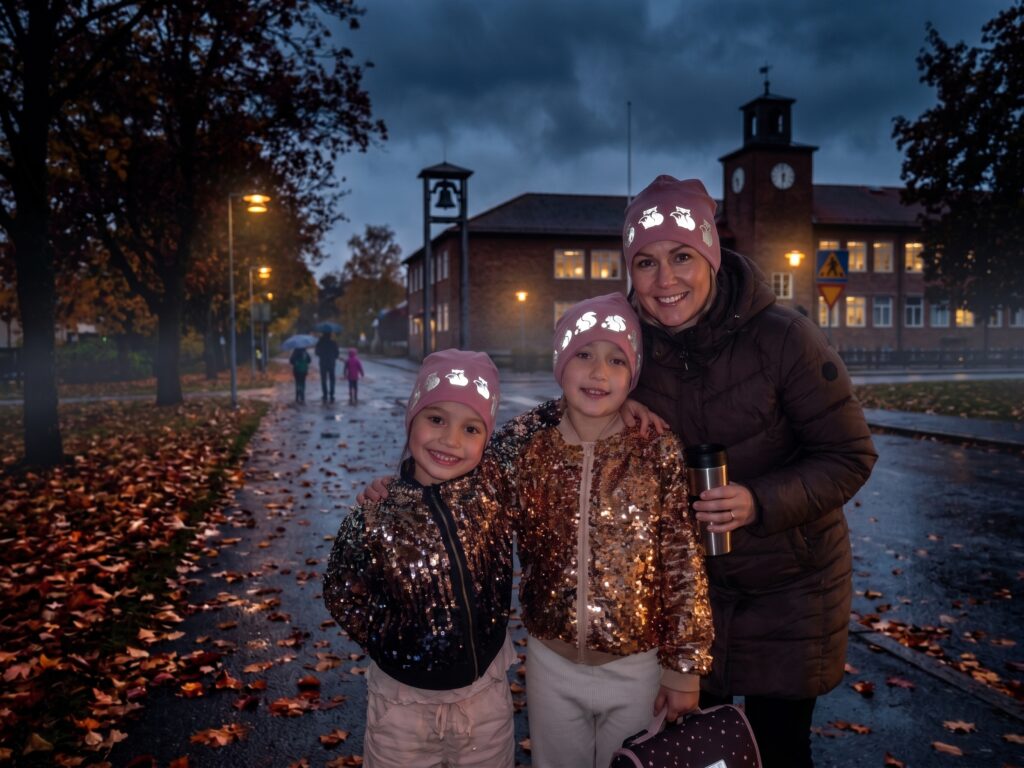
Reflective Gear for Youth Sports and Evening Activities
The best reflective gear is the kind that goes along for the ride without any extra thought. For after school activities, that means gear that fits naturally into the kit children are already carrying – not something extra to remember on top of everything else.
The sports bag: the most overlooked reflector opportunity
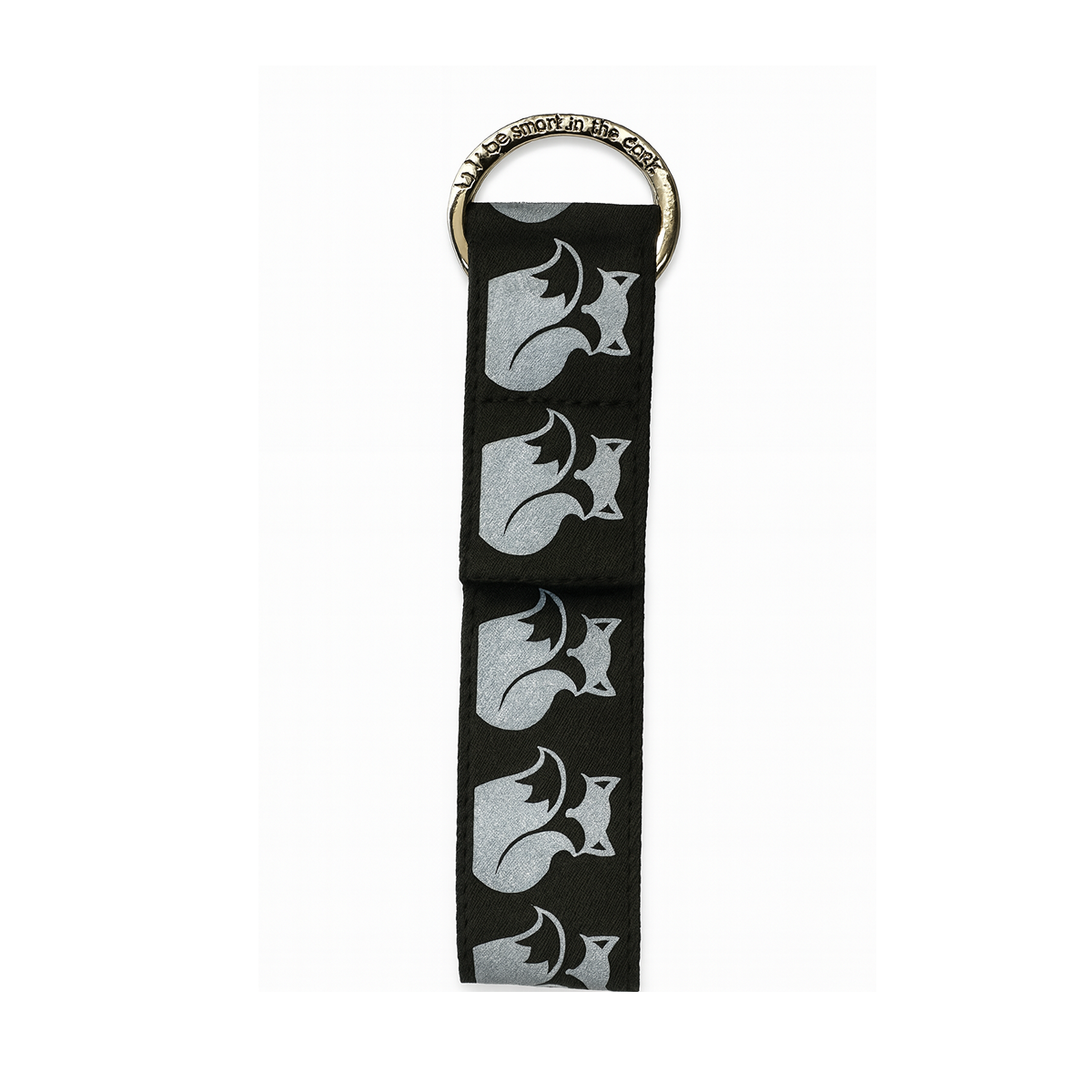
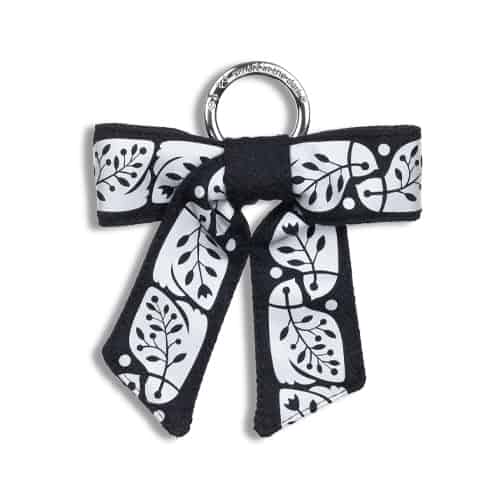
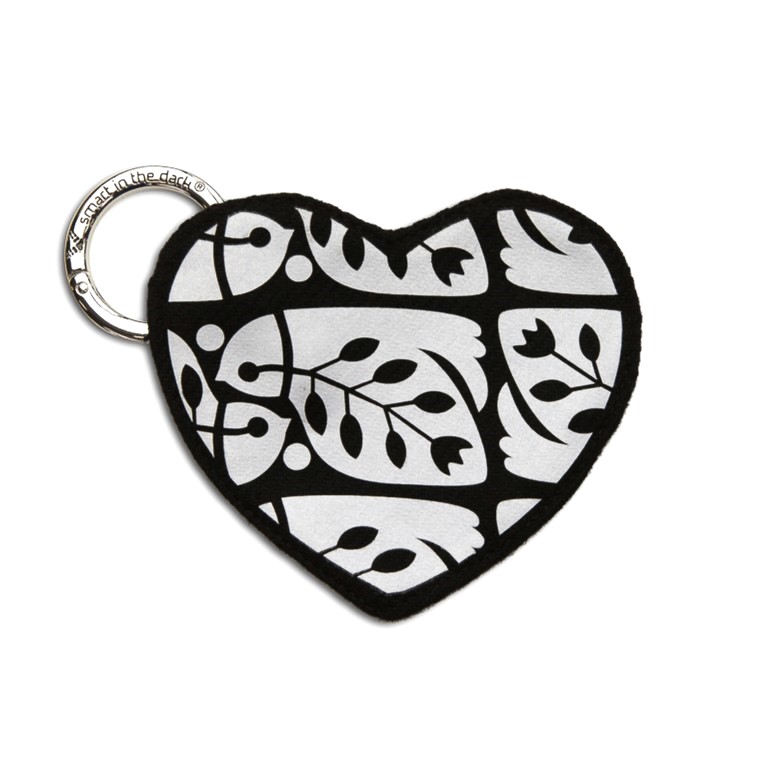
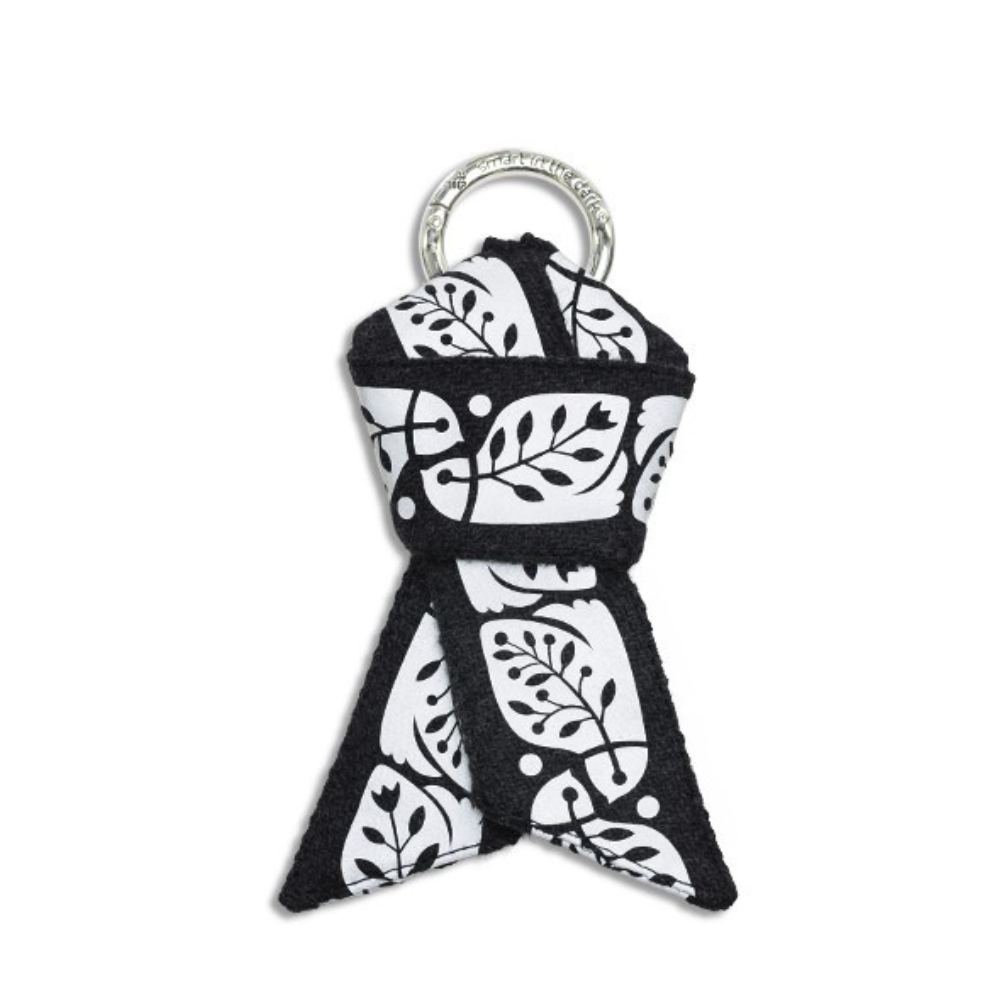
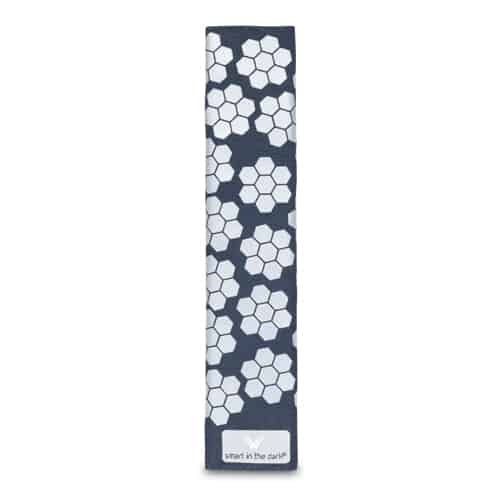
Every child heading to sports, music, or dance carries a bag. That bag swings with every step – at exactly the height a car’s headlights illuminate. A hi-vis bag charm like ELNA attaches in seconds and turns that swinging motion into a visibility signal that a driver’s peripheral vision catches almost instantly. [5]
Worn at bag height, in line with a driver’s headlights, and moving with every step, ELNA bag charm is among the most naturally placed reflectors a child can carry – and the one that requires the least change to any existing routine.
The rest of the kit
A few other pieces of reflective gear that work particularly well for the after school journey:
-
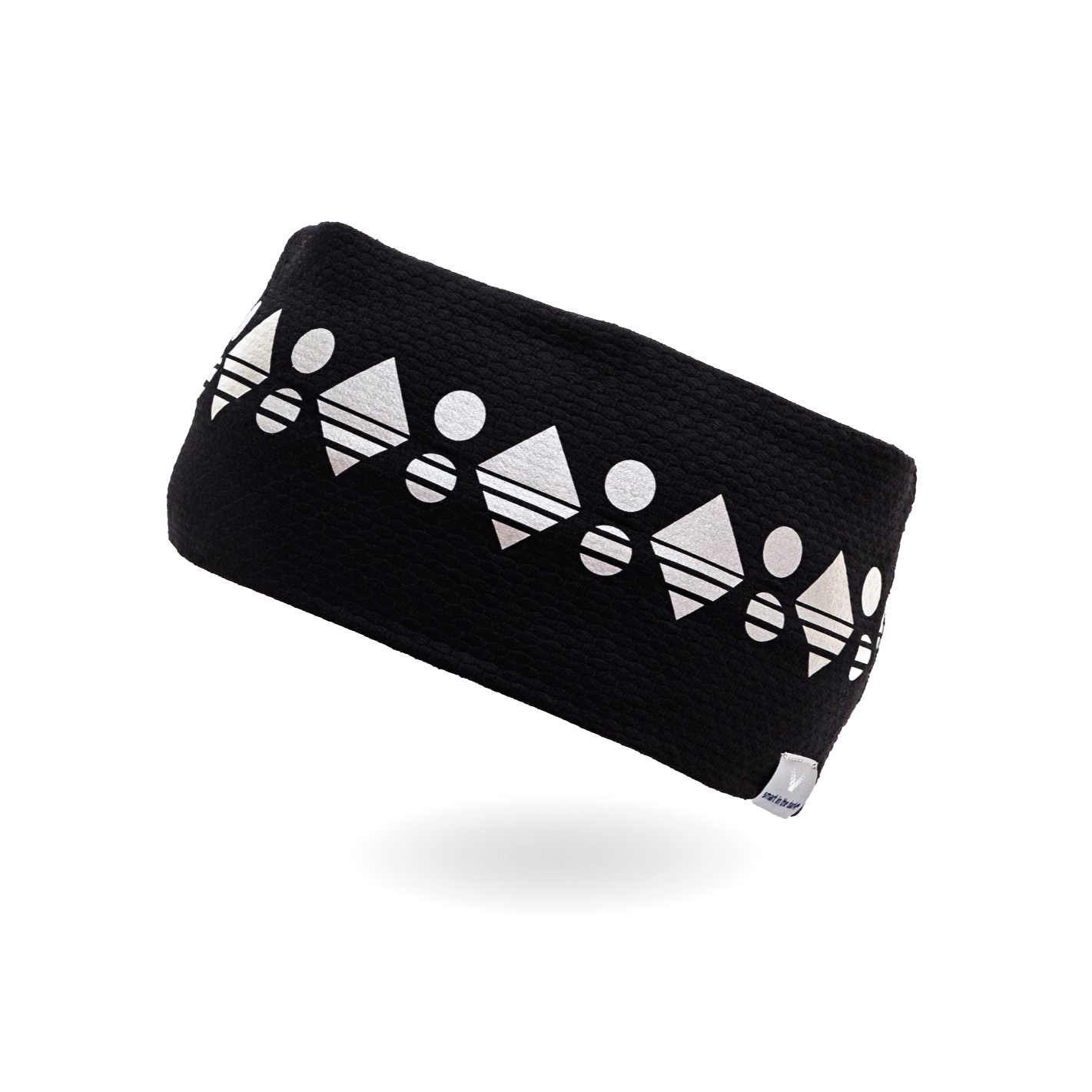
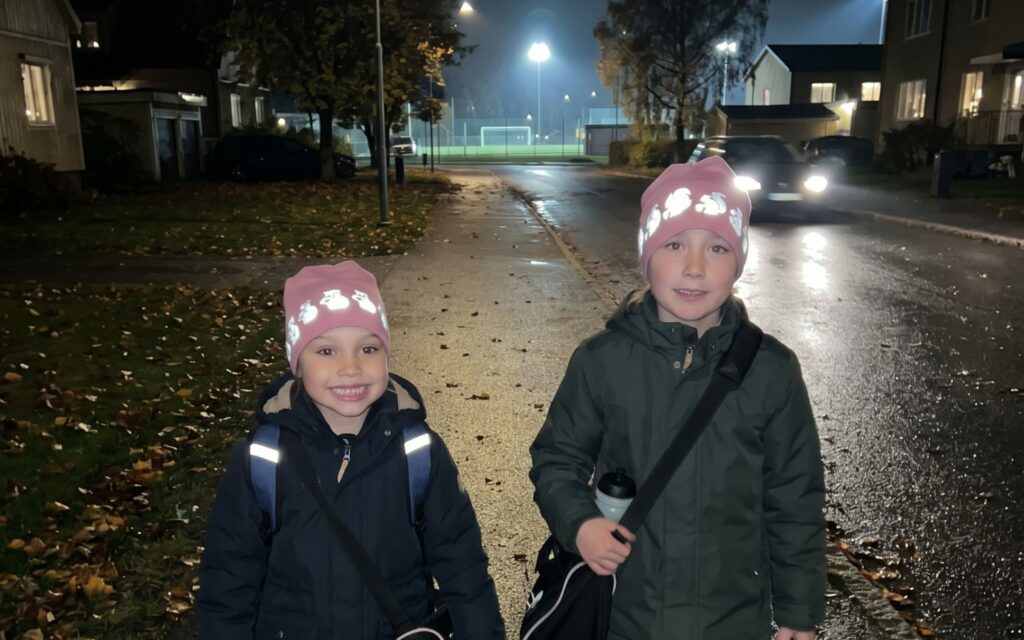
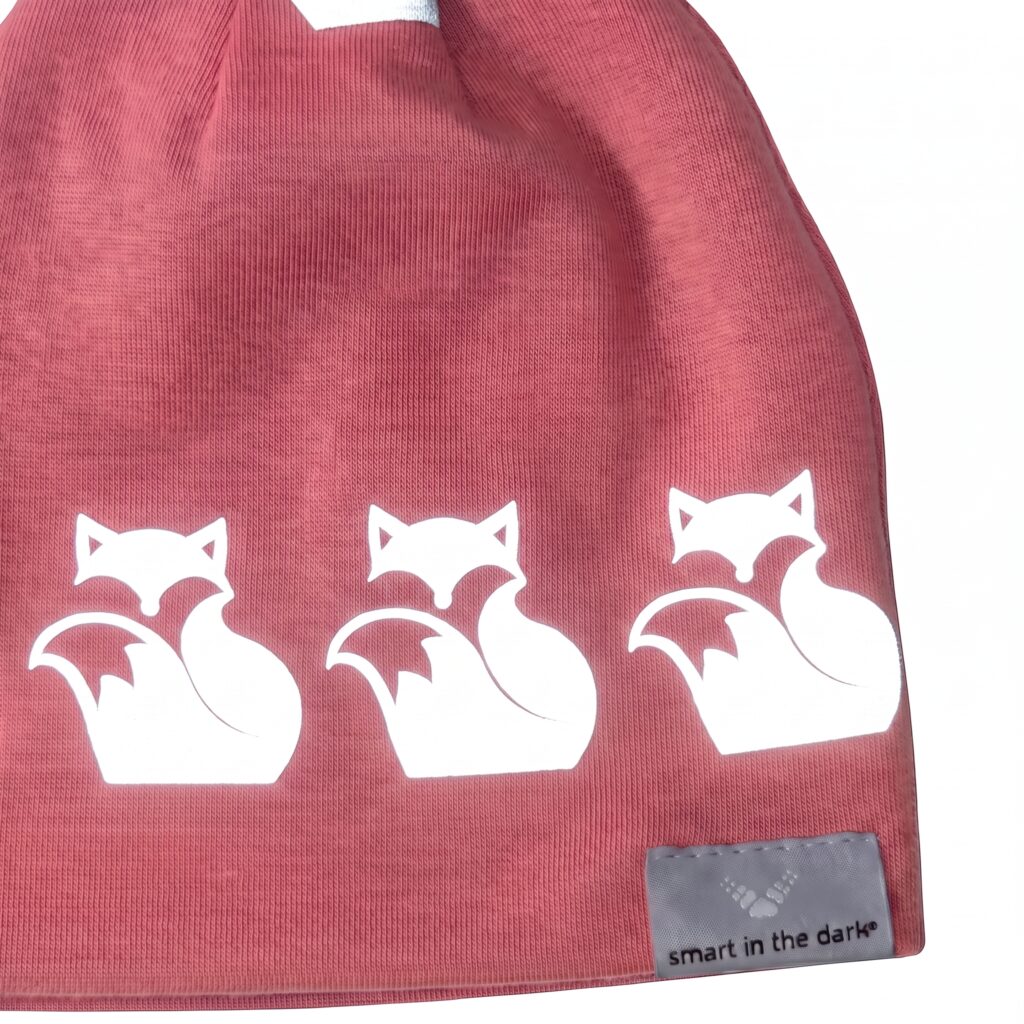
- Reflective beanie or hat. 360° head-level visibility. From September onwards, children heading to evening training are wearing hats anyway. A reflective hat is simply the hat they were going to put on. The safety is built in.
- Reflective wrist and ankle accessories. Reflective material on moving arms and legs amplifies the signal further. Research consistently finds that reflectors on moving joints – wrists, ankles, knees – create a biomotion pattern that is faster for drivers to recognise than a static reflective panel. [5]
- ELNA bag charm on the sports bag. Attaches to any bag, swings at headlight height, works from day one without any change to routine.
For a full overview of reflective options for children, see our guide to Kids Pillar: reflective gear for kids
If the Habit Is Already There, Half the Work Is Done
One of the best things about the back-to-school moment is that it creates a natural opportunity to build habits. If a child already puts on a reflective hat and clips ELNA to their school bag every morning, extending that habit to the after school training session requires almost no additional effort.
The hat goes on because it’s cold. ELNA is already on the bag. The wrist band goes on because it’s already in the kit. The visibility that comes with it is simply part of the routine – not an extra step, not something to remember, not something a tired parent has to enforce at 5:30 on a rainy Tuesday.
That is the point of building the habit at school start: the behaviour learned for the school run carries over. And the activity journey – later, darker, and statistically riskier – benefits from exactly the same gear and the same habit.
After School Activity Safety by Country: The Local Picture
The challenge of keeping children visible on their way to and from activities is consistent across countries, but the sports, the seasons, and the timing vary. Here is how things look in each of the six countries where Smart in the Dark’s products are worn.
🇬🇧 United Kingdom: After School Hours and the October Clock Change
| 43%
more child road accidents in October |
1 week
after clock change = full darkness |
The UK clock change at the end of October is the pivotal moment for children travelling to after school activities. What was a twilight journey one week becomes a journey in complete darkness the next. DfT data shows that child pedestrian incidents rise sharply in October. |
The UK’s after school sports culture is extensive and well-established – football, swimming, gymnastics, netball and rugby all draw large numbers of children to evening training sessions from September onwards. As the season moves through October, those sessions increasingly begin and end in complete darkness.
The clock change at the end of October is the pivotal moment. A child who walked to Thursday’s training session in twilight arrives and leaves in full darkness the following week. Road Safety Week, held each November and run by the charity Brake, consistently highlights the after school and evening hours as the highest-risk period for child pedestrians. [6]
🇮🇪 Ireland: GAA, Winter Pitches, and Evening Darkness
|
~375k children in GAA youth programmes |
49%
of child casualties were pedestrians |
Over 375,000 children reached through GAA primary school programmes annually – mostly outdoor, on pitches, with evening training from September. In 2019–2023, 49% of child road casualties in Ireland were pedestrians (RSA – Road Safety Authority). |
The GAA – Gaelic Athletic Association – is the backbone of youth sport in Ireland, and its training season runs straight through the autumn and winter months. Outdoor evening training on floodlit and sometimes unlit pitches is a routine part of Irish childhood from September. Children walk, cycle, and take buses to and from training, often in complete darkness.
Ireland is one of the few countries where reflective clothing is legally required for children under 12 on public roads after dark. The RSA’s Child Casualties Report 2020–2024, published in August 2025, found that one in seven child road casualties occurred on the school journey – and a significant additional proportion in the after school and evening hours. [7]
🇺🇸 United States: The 6–9 pm Danger Zone
| 55%
of US children aged 6–17 in sports or lessons |
6–9 pm NHTSA’s riskiest window for child pedestrians |
55.4% of US children aged 6–17 participate in a sports team or take lessons (NSCH, 2023). NHTSA data shows 6–9 pm as the single riskiest three-hour window for child pedestrians in autumn and winter. |
More than half of all children in the US are involved in organised sport or lessons. Soccer practice, baseball, gymnastics, swimming, music, dance – millions of evening journeys every week, concentrated in exactly the hours that NHTSA and the American Academy of Pediatrics flag as the highest-risk window for child pedestrians. [1, 2]
In many suburban areas, the distances involved are also longer than in denser cities – and in some cases require children to walk along roads without footpaths or lighting. The AAA Foundation for Traffic Safety notes that the autumn clock change “pushes more of the after school window into darkness” overnight, a shift that catches many families unprepared. [8]
🇨🇦 Canada: Ice Time, Dark Arenas, and the Evening Commute
| 700k+
registered youth hockey players |
21%
of night-time fatalities involved dark clothing |
Over 700,000 youth hockey players are registered in Canada – with arena bookings typically running from 6 pm into the evening. Add swimming, gymnastics, dance and music lessons, and the evening journey is one of the most common trips Canadian children make. |
Hockey is embedded in Canadian life, and its scheduling is largely nocturnal by necessity – arenas can only fit so many children, so youth ice time is pushed to the evenings. For a child attending hockey practice in November in Toronto, Montreal, or Edmonton, both legs of the journey happen in complete darkness, often in cold and snowy conditions.
Statistics Canada data shows that 21% of night-time pedestrian fatalities involved a person wearing dark clothing. In winter, children travelling to evening activities are wearing dark technical gear, often in conditions where even lit roads offer poor visibility. The combination of dark clothing, dark environment, and heavy kit bags is exactly where a reflective accessory makes the most difference. [9]
🇦🇺 Australia: Winter Sport Season and After-School Training
| 38%
of Australian children in organised sport |
June–Aug southern hemisphere winter sport |
38% of Australian children aged 0–14 participate in organised sport outside school hours at least once a week (Australian Sports Commission). AFL, netball, rugby, and swimming: major winter sports mean regular evening training during Australia’s darkest months. |
Australia’s sporting culture is deeply embedded in its school and community calendar – AFL, netball, rugby union, rugby league, and swimming dominate the winter season from June to August. For children in these sports, evening training sessions run through the southern hemisphere’s darkest months, creating exactly the same visibility challenges faced by children in UK and European autumn.
The Australian Road Safety Foundation flagged a 26% rise in pedestrian fatalities in the first five months of 2025 compared to the same period in 2024. For parents of children in winter sport, the message is practical: an ELNA on the sports bag and a reflective hat for the walk to training costs almost nothing. The habit built in winter carries through into the rest of the year. [10]
🇳🇿 New Zealand: Rugby, Rural Roads, and Winter Training
|
Term 3 winter term = darkest school weeks |
~30km/h new variable speed limit at schools 2026 |
New Zealand’s Term 3 (July–September) runs through the southern hemisphere winter – the darkest weeks of the school year. Waka Kotahi introduced 30 km/h variable speed limits outside school gates from 1 July 2026 – a nationwide rollout acknowledging the pedestrian risk during school and activity hours. |
Rugby is the national sport of New Zealand, and youth rugby training runs through the winter from May to August – the darkest period of the year in the southern hemisphere. Children walk, cycle, and take buses to training grounds and school sports fields across the country, many of which are on unlit rural roads or paths without footpaths.
Waka Kotahi notes that darkness-related injuries are most common among adults and older children – the demographic most likely to be travelling independently to evening activities. [11] On an unlit road at night, the gap between 20 metres and 125 metres of visibility is not a marginal improvement. It is the entire margin.
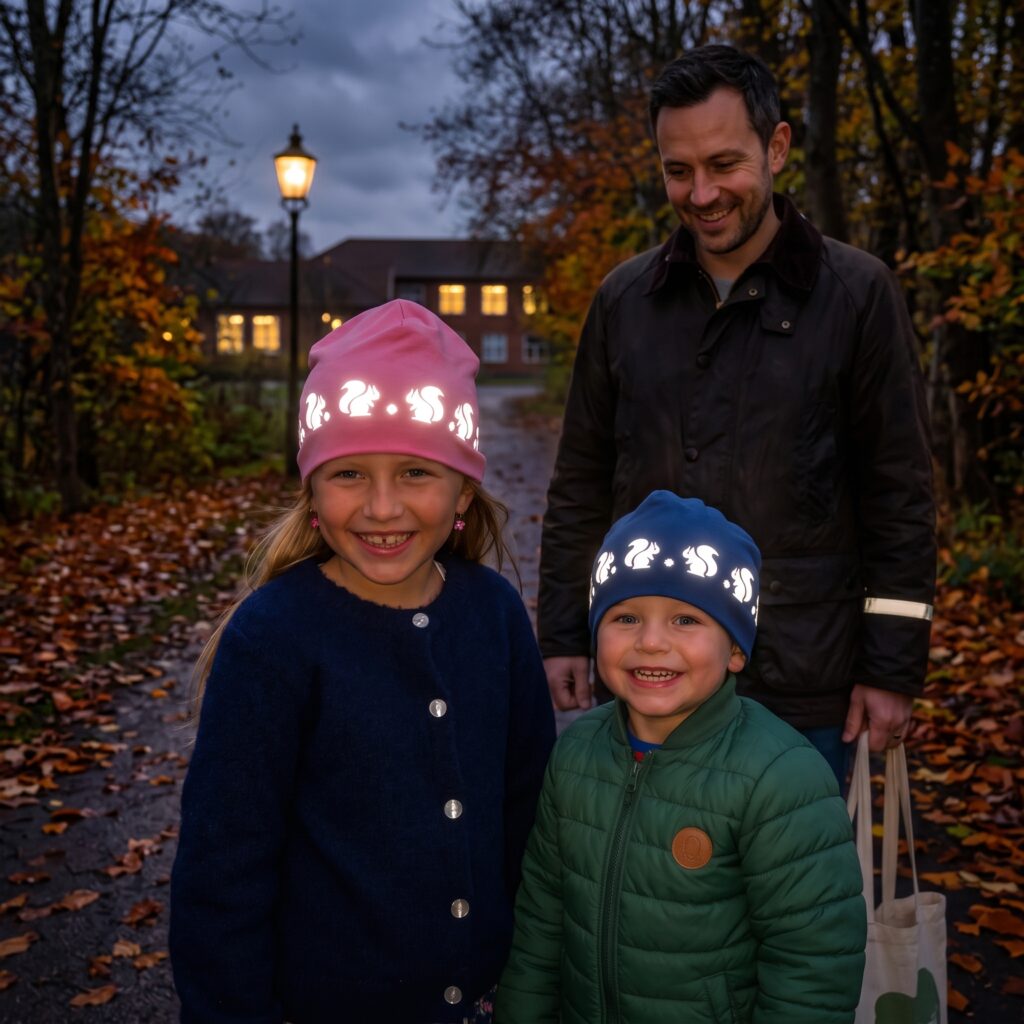
Same Habit. Every Journey.
The reflective hat that goes on for the school run. The ELNA that clips to the school bag. The wrist band in the kit. None of these require a separate decision for the after school activity journey. They are already there, already part of the routine – and they work just as well on the walk to football training or the bus home from music lessons as they do on the morning school run.
The hours between 6 pm and 9 pm are when the risk is highest. They are also exactly when most children head to their activities, and when most of them walk home. A habit built in September is already in place by the time the dark evenings arrive.
Take care of yourself out there. You matter. And so does the journey home.
References
[1] NHTSA / heypolo.com: 6–9pm riskiest window for child pedestrians, autumn and winter (2022 data)
[2] NSCH via USAFacts: 55.4% of US children aged 6–17 in sports or lessons (2023)
[3] Australian Sports Commission: 38% of children aged 0–14 in organised sport weekly (2025)
[4] Smart in the Dark: reflector visibility distances (125m with / 20–30m without)
[5] Using retro-reflective cloth to enhance drivers’ judgment at night-time – PubMed (2021)
[6] Brake: Road Safety Week – child pedestrian safety in after school hours
[7] RSA Child Casualties Report 2020–2024 – Road Safety Authority Ireland (August 2025)
[9] Pedestrian Fatalities in Canada 2018–2020 (dark clothing at night) – Statistics Canada
[10] Why Are Pedestrian Fatalities Rising in Australia? – Australian Road Safety Foundation (2025)
[11] NZ Pedestrian Profile – Waka Kotahi NZTA
[12] BBC / Euronews: Child e-scooter injuries increased 15-fold in UK 2019–2024 (August 2026)
[15] DfT: Reported Road Casualties GB – Pedal Cycle Factsheet 2023