 English
 Swedish
 Danish
 Norwegian
 Finnish






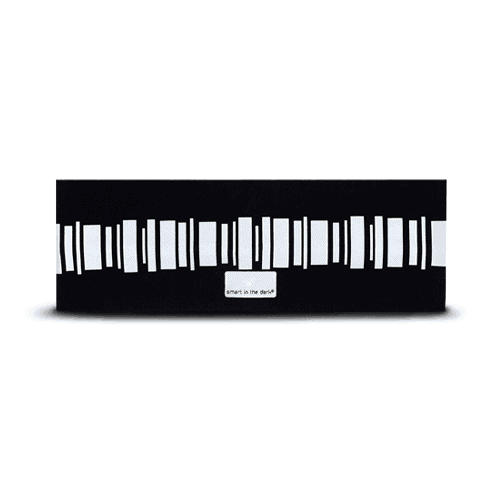
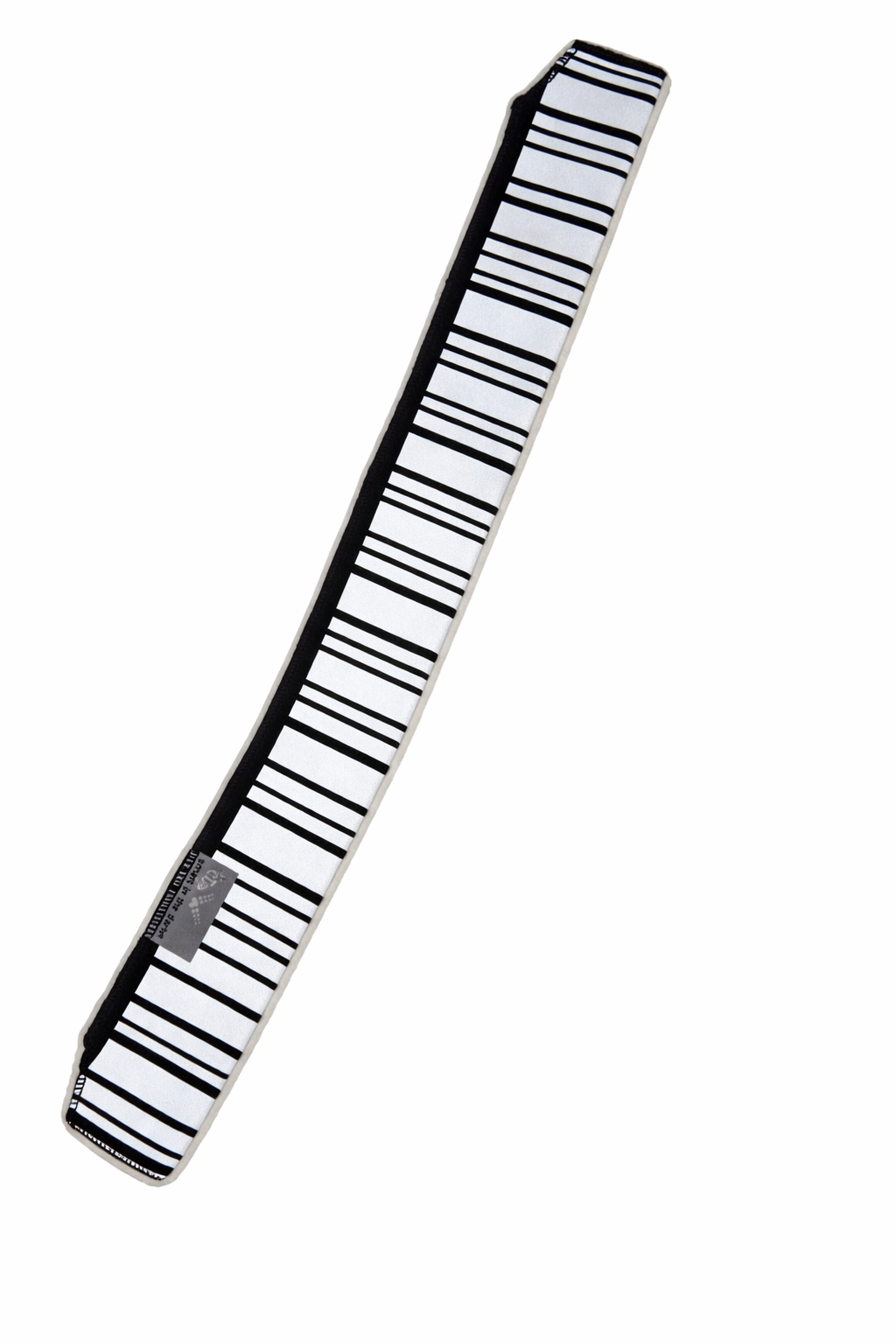
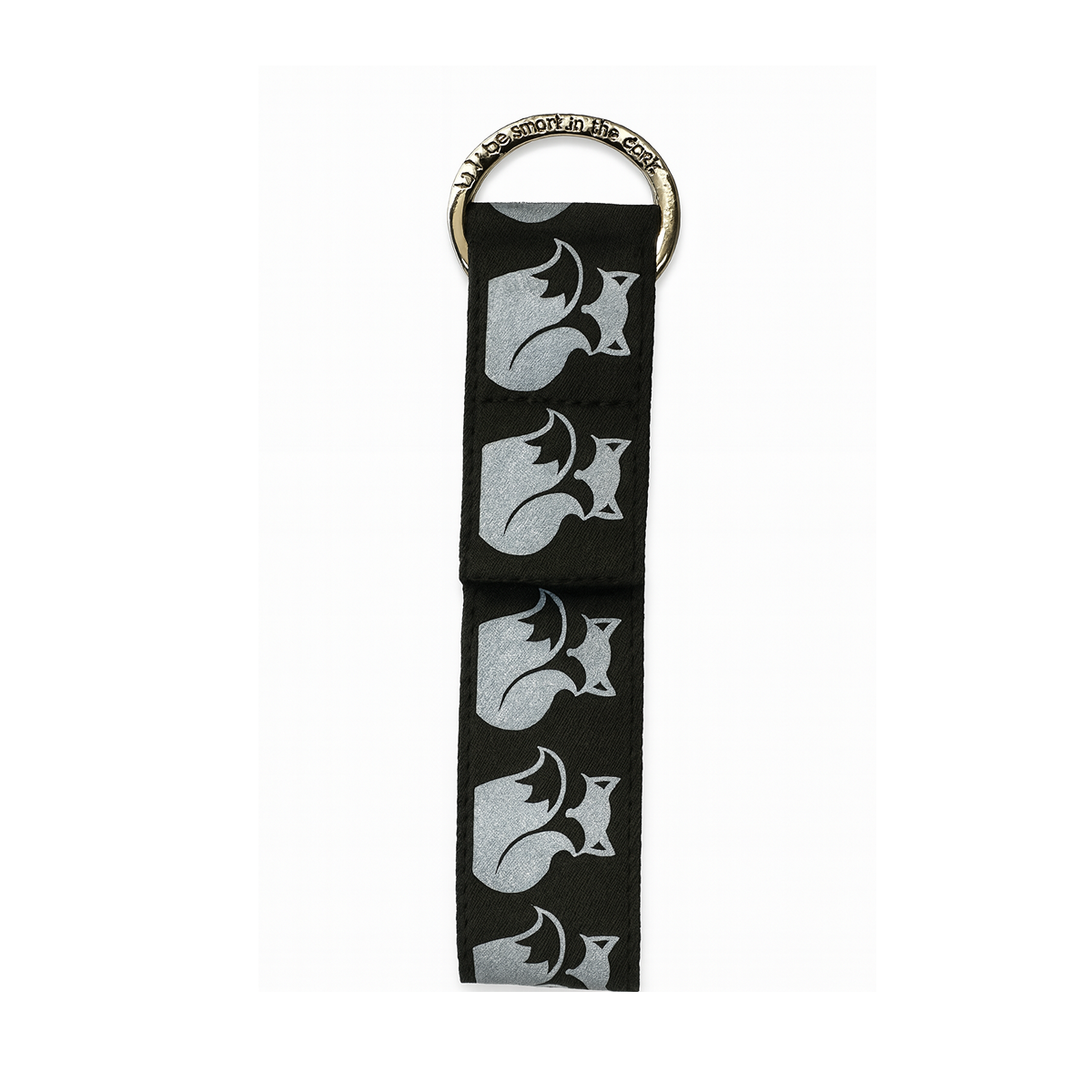




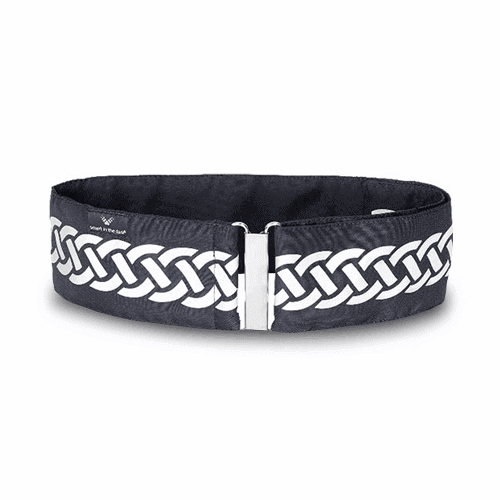










Dog Safety & Tips, Reflective Products, Reflector Safety, Tips & Guides
Dog Safety Reflectors: How to Keep Your Dog Visible During Dark Mornings and Nights
You know your dog. You know the colour of their coat, the way they pull on the leash past that particular lamppost, the exact spot where they always want to stop and sniff. What you may not always know is how hard they are to see.
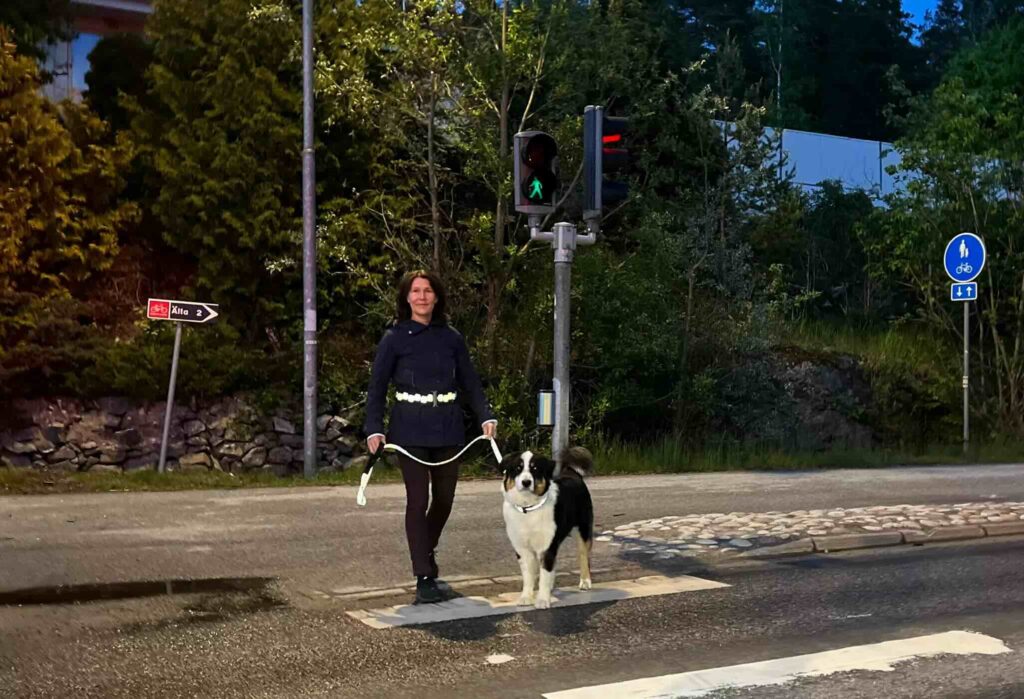
When daylight fades, even familiar evening walks carry a risk that most dog owners don’t think about until it’s too late. A dark coat against a dark pavement. A lead at ankle height. A dog stepping ahead of you into the road. In that moment, dog safety reflectors are not a luxury accessory – they are the simplest, most loving thing you can do for the animal in your care.
To understand what actually works, and why, we spoke with dogowner Åsa Larsson, who has thought carefully about dog visibility and the difference it makes in practice. But first, here are some important numbers.
|
125m |
How far away a driver can spot a dog wearing a reflector – compared to just 25 metres (80 feet) for a dog without one. That gap can be the difference between a near-miss and a safe walk home. [1] |
|
74% |
Of all pedestrian traffic deaths in the US occur in dark conditions. Dog walkers are out during exactly these hours – and their dogs are the hardest thing for a driver to spot. [2] |
|
15–80cm (6–31 inches) |
The height of a dog’s back varies a lot from breed to breed – often low enough to disappear into the shadows of parked cars, hedges, fences and maybe even your own shadow. They’re also hard to distinguish from dark tarmac even on a well-lit street. [3] |
The Invisible Dog: A Problem Most Owners Don’t See Coming
Most dog owners are thoughtful about safety. They keep their dogs on leads near traffic. They choose well-lit routes. They might even wear a reflective jacket themselves. What many don’t realise is that their dog can be almost invisible to an approaching driver.
A dog moves differently to their owner – lower to the ground, often ahead or behind, easily lost in the shadow of a parked car, a hedge, a dark garden wall. Even on a well-lit street, there’s almost no contrast between a dark coat and dark tarmac. A driver may see you clearly and still not see your dog until it’s too late.
“We remember our own reflective jacket. We forget that our four-legged companion blends into the shadows too”
This is not a problem unique to one breed or one kind of walk. Black Labradors, dark-coated spaniels, grey lurchers – any dog with a coat that echoes the darkness is at risk. And the risk is highest in exactly the times most dogs get walked: early morning before work, and evenings after it.
What Dog Reflectors Actually Do – and Why They Work
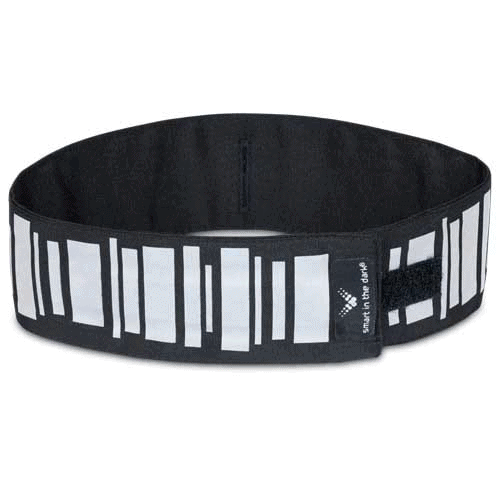
A quality dog safety reflector works by bouncing light directly back towards its source. When a car’s headlights hit a retroreflective material – whether on a collar band, a lead sleeve, or an accessory – that light returns straight to the driver’s eyes, making the dog visible far earlier than any other method.
The difference in distance is striking. Without reflectors, a driver may only register a dark-coated dog at around 25 metres (80 feet) – at 50 km/h (31 mph), that leaves almost no time to stop. With a quality reflector, that visibility extends to 125 metres (410 feet) or more, giving the driver four to five times the stopping distance to react safely. [1]
For a full overview of the best reflective gear for dogs – from lead sleeves to collar bands and accessories – our complete guide covers everything you need to know.
Why a swinging leash is your dog’s best safety asset
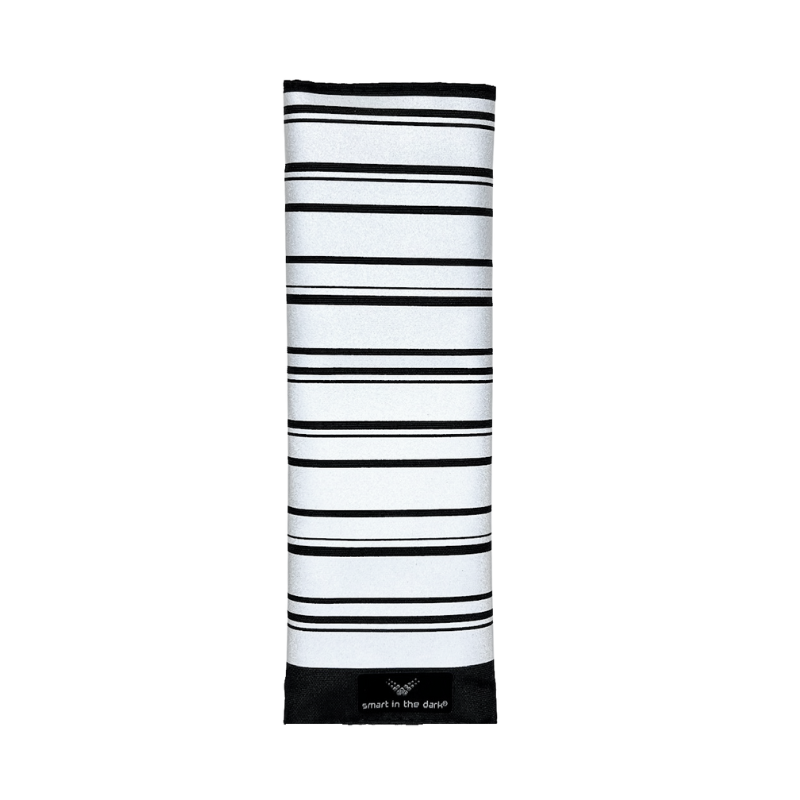
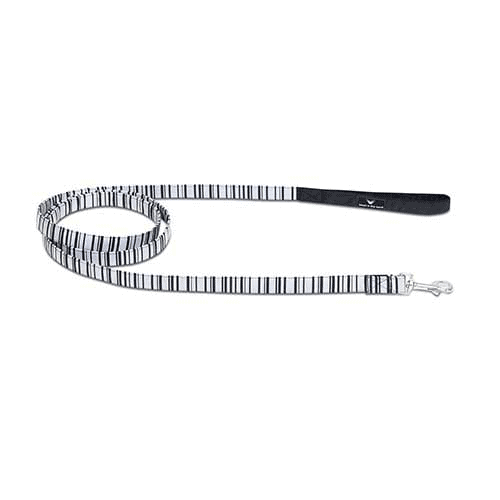
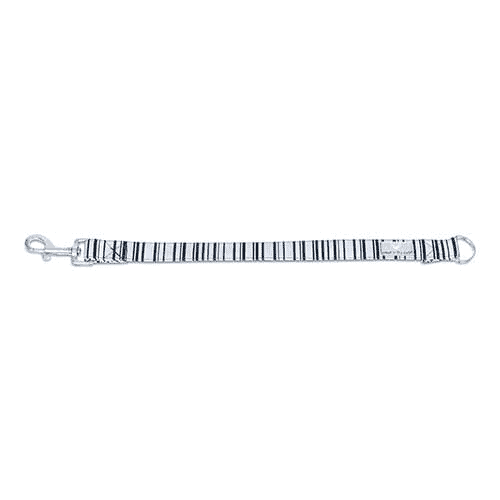
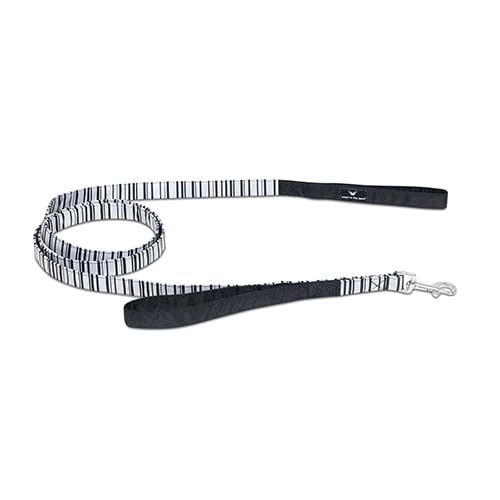
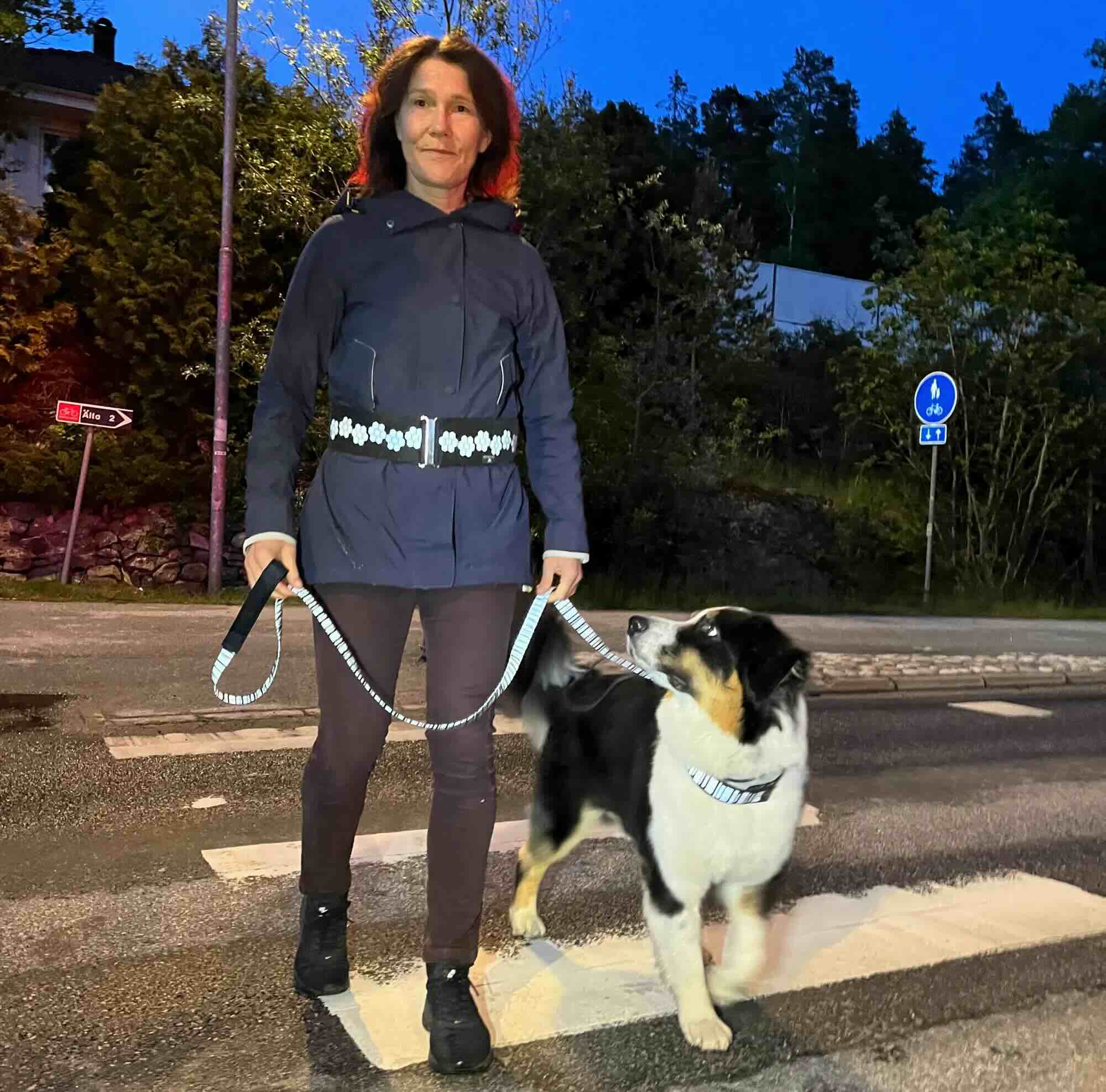
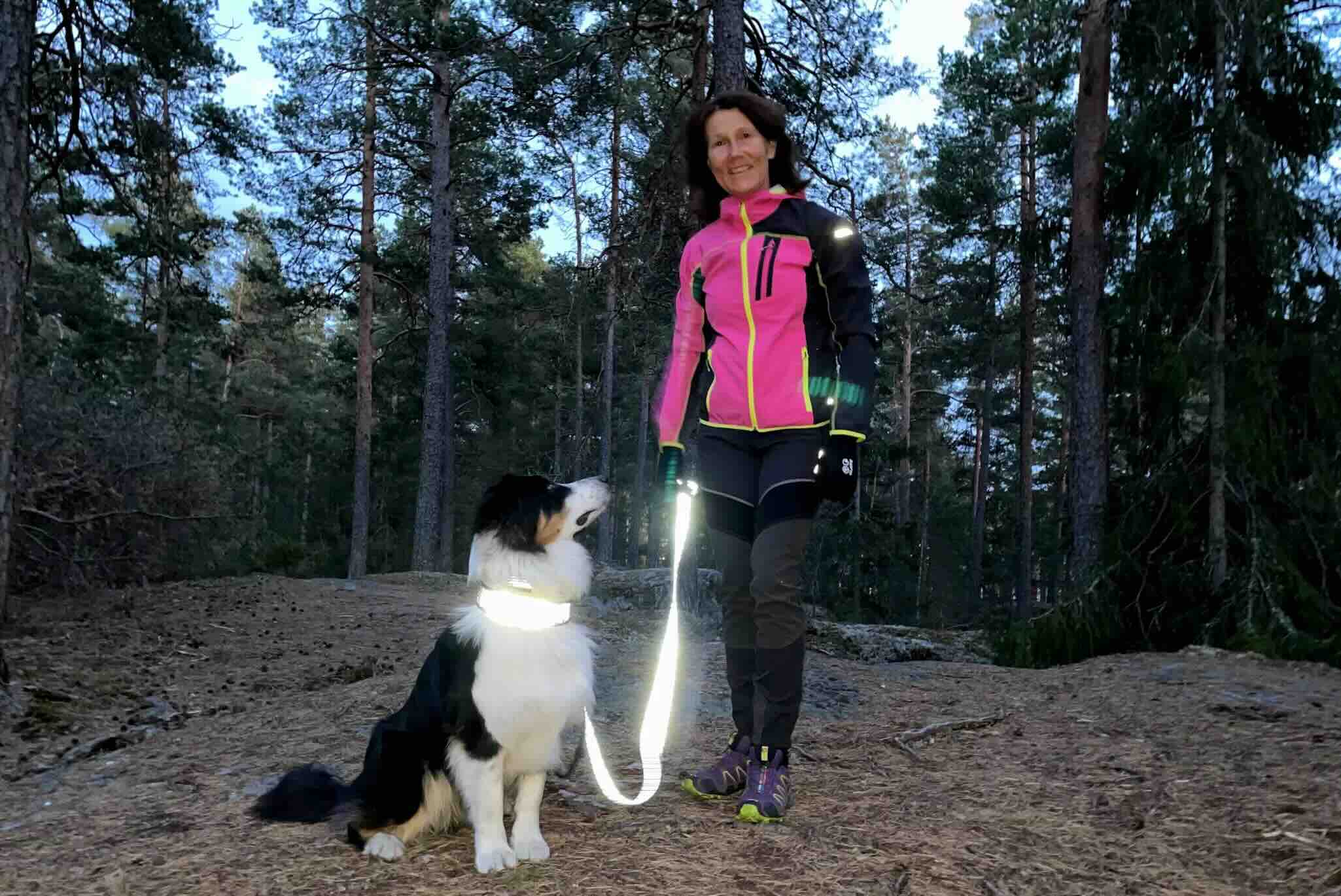
There is a detail in the research worth knowing: reflective material placed on moving parts is significantly more effective than the same material on a static surface. A reflective sleeve on a swinging lead, for example, creates a rhythmic pattern of light that a driver’s peripheral vision catches almost instantly – in the same way our brains are wired to notice movement in the dark. [4]
This is particularly good news for dog owners, because the leash is already in motion on every single walk. A reflective wrap slipped onto your existing leash, or a reflective collar band that catches the light as your dog trots, requires no changes to your routine. The movement you already have is doing the work.
Even a Trained Dog Can Surprise You
Åsa Larsson lives in a densely built residential area outside Stockholm and walks her dog Cash every day, in all weathers. She always uses reflectors on Cash in the evenings – and has thought carefully about how to handle a dog safely in traffic. We asked her to share what she’s learned.
A: When I walk Cash, it’s important to keep track of both him and other road users. Even though he’s trained to walk near busy roads, unexpected things can always happen – another dog he wants to say hello to, or a cyclist passing close at speed.
A: The same principle applies in daylight and in the dark: keep a close eye on your dog. If the dog lunges, it can end up in the road. Use a firm, stable lead that’s easy to grip – not an extendable or elastic one on busy roads. And don’t zigzag when walking among other people. The lead can become a trip hazard for pedestrians and cyclists.
A: Dog meetings can be critical moments – it’s easy to lose focus on other traffic just when you need it most. Train your dog to walk calmly in traffic environments. And in winter, always wear boots with grip. If your dog lurches on an icy road, an accident can happen fast.
What comes through clearly in Åsa’s experience is that dog safety in traffic is about more than visibility alone – it’s about preparation, training, and the right gear. But reflectors are the simplest part: a reflective lead sleeve or collar band requires no training, no change of routine, and no effort at all. It just works, every single walk.
As Åsa puts it: reflectors are a cheap insurance policy. With them, a driver can see you and your dog from 125 metres (410 feet) away. Without them, they may not notice until 25 metres (80 feet) – and at that distance, on a dark road, there’s almost nothing anyone can do.
Keeping Dogs Visible: What to Look for When Choosing Reflectors
The best dog safety reflector is the one that fits naturally into your daily walk – not the one that requires a new routine or a reluctant dog. A few things are worth bearing in mind:
- Prioritise moving parts. A reflective sleeve on the lead, or a band that moves with your dog’s legs, outperforms a static reflector clipped to a harness. Motion amplifies the visibility signal.
- You don’t need to replace your existing gear. Smart reflective wraps and collar bands fit over your dog’s current collar and lead. Safety doesn’t have to mean starting from scratch.
- Look for certified retroreflective material. 3M Scotchlite and equivalent tested materials bounce light directly back to the source. Not all ‘reflective’ products offer the same visibility at distance.
- Consider your dog’s coat colour. A dark-coated dog needs more coverage than a pale one. If in doubt, add reflective detail to both the lead and the collar.
- Both of you should be visible. A dog wearing reflectors and an owner in dark clothing creates a confusing visual signal. Equipping both of you makes you easier to read as a pair.
For a curated overview of practical options, see our guide to reflective dog walking accessories
Dog Walking Safety After Dark: How the Risk Looks Around the World
Dog walkers are out in the dark every single day – twice a day in most households, regardless of weather, season, or how early the sun sets. The statistics on pedestrian risk in darkness apply directly to everyone out on those walks.
🇬🇧 United Kingdom: The Dog Walk That Gets Darker in October
| 409
pedestrian deaths, 2024 |
8/week
on UK roads |
409 pedestrians were killed on UK roads in 2024, roughly eight every week (DfT/Brake). Weekday peak hours for pedestrian casualties are 3–6pm – exactly when many dog owners head out for the afternoon walk. Weekend risk peaks later into the evening. (DfT, 2024) |
In the UK, the last Sunday of October changes everything for dog walkers. The clocks go back, and the 6 pm walk that happened in early twilight the week before now happens in complete darkness. The dog still needs to go out. The route is the same. The risk is not.
Road Safety Week, held each November and run by the charity Brake, consistently highlights pedestrian visibility as one of the most preventable causes of serious road injury. Dog walkers are out on the roads precisely during the hours the data flags as most dangerous. [2]
🇮🇪 Ireland: Where Visibility Is Already Written Into Law
|
41 pedestrian deaths, 2025 |
4-8 pm
daily peak for fatal collisions |
33 pedestrians were killed on Irish roads in 2024 – down from 44 in 2023, but with 2025 already showing 41 deaths and the RSA flagging rising concern for vulnerable road users. Evening hours between 4pm and 8pm consistently show the highest concentration of fatal collisions. |
Ireland is one of the few countries where reflective clothing is legally required for children on public roads after dark – a law that reflects a clear understanding that visibility saves lives.
The RSA’s own data shows that evening hours between 4pm anf 8pm consistently record the highest concentration of fatal collisions – for dog Walkers, this is exactly the time of day for the second walk. [5] For dog walkers, who are out twice or more daily regardless the season, Q4 (October – December) and Q1 (January – March) are the most important window of the year to check their gear.
🇺🇸 United States: 74% of Pedestrian Deaths Happen After Dark
| 74%
of pedestrian deaths after dark |
7,148 pedestrians killed, 2024 |
74% of pedestrian traffic deaths in the US occur in dark conditions (GHSA/NHTSA, 2024). Fatal pedestrian crashes at night rose 84% between 2010 and 2023 – compared to 28% in daylight. |
Nearly three-quarters of all pedestrian deaths now occur in dark conditions. [2] For the millions of American households that include a dog, this statistic lands close to home: those evening and early morning walks happen in exactly the conditions the data flags as highest risk.
There is no national requirement for dog walkers to use reflective gear, but the guidance from state road safety agencies is consistent: if you’re walking near traffic after dark, be seen. A reflective collar band costs almost nothing. A dark-coated dog at 25 metres (80 feet) on an unlit road may cost far more.
🇨🇦 Canada: Dog Walking in the Long, Dark Winter
| Over +298
pedestrian deaths p.a., 2018-2020 |
21%
of night deaths wore dark clothing |
On average, more than of 300 pedestrians were killed each year on Canadian roads between 2018 and 2020 (Statistics Canada). Statistics Canada found that 21% of pedestrian fatalities at night involved a person wearing dark clothing. |
Canada’s winters are long and dark. By November, meaningful daylight shrinks dramatically, and the at least twice-daily dog walk – morning and evening – happens largely in complete darkness for months at a time. Statistics Canada found that 21% of night-time pedestrian fatalities involved a person in dark clothing. [6]
For dog walkers in Canada, the visibility challenge is doubled: dark winter gear on the owner, and a dark-coated dog often walking in the shadow of the owner, parked cars, bushens by the side walk, etc. A reflective lead sleeve and a collar band together create the kind of visible signal that cuts through even the most challenging winter conditions.
🇦🇺 Australia: Winter Dog Walks and a Rising Safety Challenge
| 174
pedestrian deaths, 2024 |
26% rise infatalities, 2025 |
174 pedestrians were killed on Australian roads in 2024 – the highest figure in over a decade (BITRE). In the first five months of 2025, 83 pedestrians were killed and fatalities rose 26% year-on-year (ARSF).
|
Australia’s pedestrian safety challenge is worsening at a time when dog ownership is at record highs. Nearly 70% of Australian households own a pet, and dogs need walking in all weathers and seasons – including the June-to-August winter months when evenings draw in and early mornings are darkest. [7]
The Australian Road Safety Foundation has raised significant concern about the sharp rise in fatalities in 2024 and 2025. Their guidance is clear: wear visible clothing after dark. For dog owners, that means thinking about both ends of the leash.
🇳🇿 New Zealand: Country Paths, Unlit Roads, and the Evening Walk
|
25 pedestrian deaths, 2025 |
292 total road deaths 2024 (lowest in 100 yrs) |
In 2023, 25 pedestrians were killed on New Zealand roads (ehinz.ac.nz / Waka Kotahi NZTA). 68% of all road deaths in NZ occur on rural roads – many of which have no lighting, without footpaths or separation from traffic. |
New Zealand’s combination of a strong outdoor culture and a high proportion of rural roads creates a specific challenge for dog walkers. Many evening and morning walks take place on unlit country roads or paths with no kerbs and no separation from passing vehicles. A dog off the edge of the path, in a dark coat, at low height, is close to invisible.
Waka Kotahi notes that darkness-related injuries are most common among adults – the core dog-walking demographic. [8] On a country road at night, where a car might be travelling at 80–100 km/h (50-65 mph), the difference between a dog visible at 25 metres (80 feet) and one visible at 125 metres (410 feet) is not a minor improvement in safety. It is everything.
A Small Thing That Means the World
Your dog can’t choose their coat colour. They can’t judge the speed of an approaching car. They trust you completely, every single time you pick up the lead.
Dog safety reflectors don’t change your walk. They don’t change your dog’s routine or your own. They simply make the thing that matters most – coming home safely together – far more likely.
The designs have never been better. The materials have never been more effective. And the difference between 25 metres (80 feet) and 125 metres (410 feet) of visibility has never been easier to close. Take care of yourself out there. You matter. And so does the one on the other end of the lead.
Let Your Dog Stay Visible Every Time You Walk.
References
[1] Smart in the Dark: reflector visibility distances (125m with / 25m without reflector)
[2] NHTSA / Injury Facts: Pedestrians and Car Crashes – 74% in dark conditions (2024 data)
[3] Average dog height reference: https://caninecultureuk.com/pages/dog-height-chart
[5] RSA Pedestrian Spotlight Report 2020–2024 – Road Safety Authority Ireland
[6] Pedestrian Fatalities in Canada 2018–2020 – Statistics Canada
[7] Pet ownership statistics Australia 2024 – Animal Medicines Australia
[8] NZ Pedestrian Profile – Waka Kotahi NZTA (darkness injuries, rural road context)
[9] Why Are Pedestrian Fatalities Rising in Australia? – Australian Road Safety Foundation (2025)
[10] RSA Road Deaths 2023 – Road Safety Authority Ireland